Why I built Filarr
I wanted one app for my files, my notes, and my knowledge graph — encrypted by default, no cloud, no account. Nothing existed, so I built it.
Mathis Belouar-Pruvot
Quick Answer. Filarr was built because no single tool combined encrypted file storage, a rich note editor, and a knowledge graph in one local-first app. Notion holds your data on its servers, Obsidian doesn't encrypt natively, Cryptomator only does vaults. After 18 months of solo development, Filarr does all four — encrypted by default, free, no account required.
Update — March 2026: Cloud sync with multi-device support is now live in v2.0. Some parts of this article describe features that were planned at the time of writing and are now available.
What problem was nobody solving in productivity tools?
I use a lot of tools. Notion for notes. Google Drive for files. Obsidian when I want a graph view. A separate encryption tool when I need privacy. Four apps, four data silos, four places where my data leaks.
One day I realized: I don't want four tools. I want one. One place for my files, my notes, and the connections between them. Encrypted by default. No cloud. No account. No subscription.
I looked for it. It didn't exist.
Which note-taking tools did I try first?
Notion — Great editor, but everything lives on their servers. I can't encrypt anything. I can't work offline reliably. And the day they change their pricing or shut down, my data goes with them.
Obsidian — Fantastic for notes and the graph view. But it doesn't manage files. No encryption. And the sync is a paid add-on that still goes through their servers.
Cryptomator / VeraCrypt — Real encryption, but that's all they do. No notes, no graph, no organization. Just a vault.
Standard Notes — Encrypted notes, but no files, no graph, no wiki-links. Limited editor.
Every tool solves one piece. None solves the whole puzzle.
How did I start building Filarr?
I started Filarr in August 2024. The first version was ugly — a basic Electron shell that could encrypt and decrypt files with AES-256. No notes, no graph, no profiles. Just files and folders behind a password.
But the foundation was right: every file gets its own encryption key (FEK), derived from a master key (KEK) that never leaves your machine. If one key leaks, only one file is exposed. This architecture is baked into every layer of Filarr — it's not a feature you toggle on.
Then I kept building.
What does Filarr do today?
Eighteen months of evenings and weekends later, 394 files deep, Filarr is a full workspace:
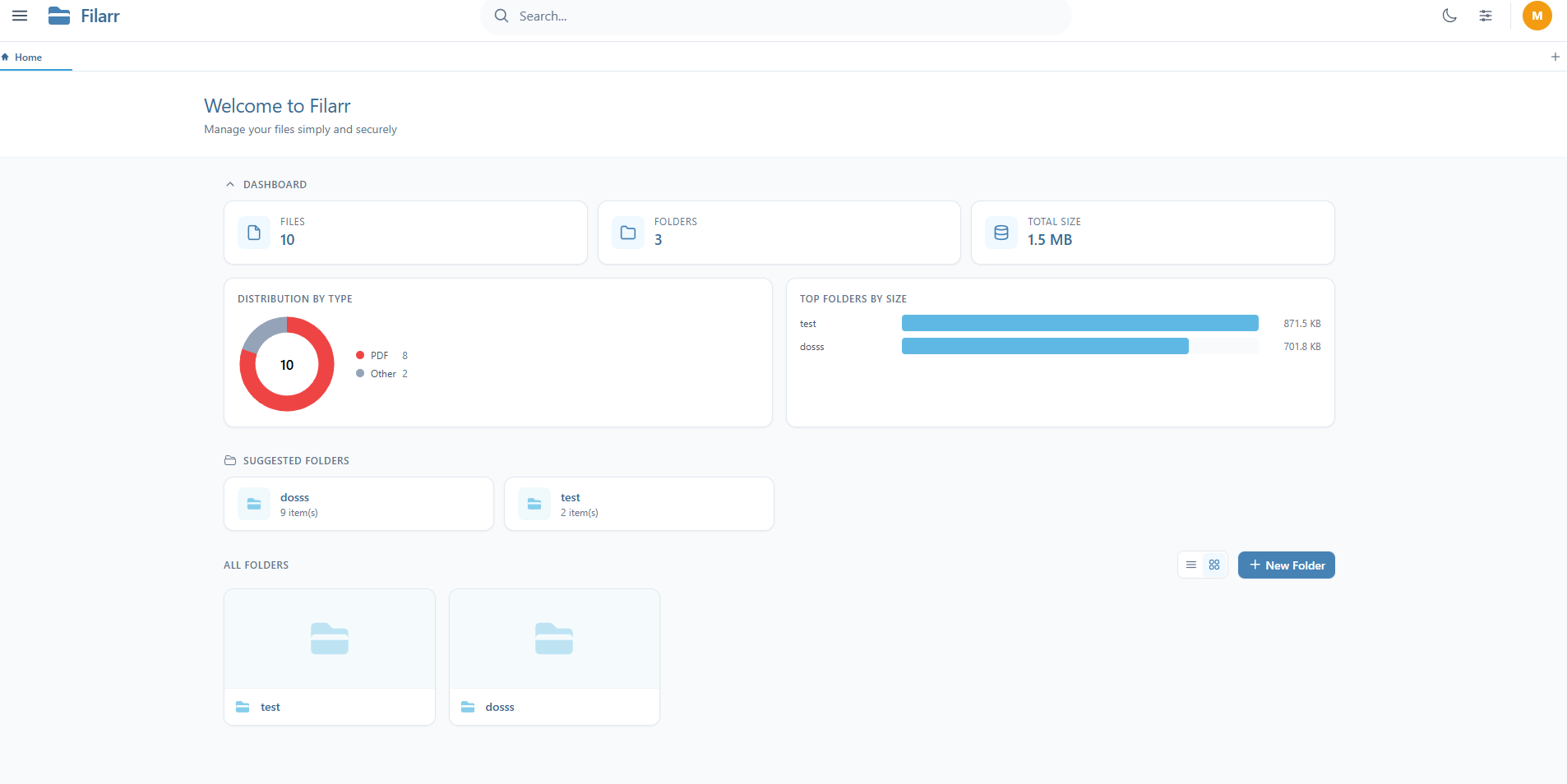
An encrypted file manager — 51+ formats with built-in preview. PDF, video with waveform, code with syntax highlighting, Markdown with Mermaid diagrams. Everything decrypted on-the-fly, in memory, never written to disk unencrypted.
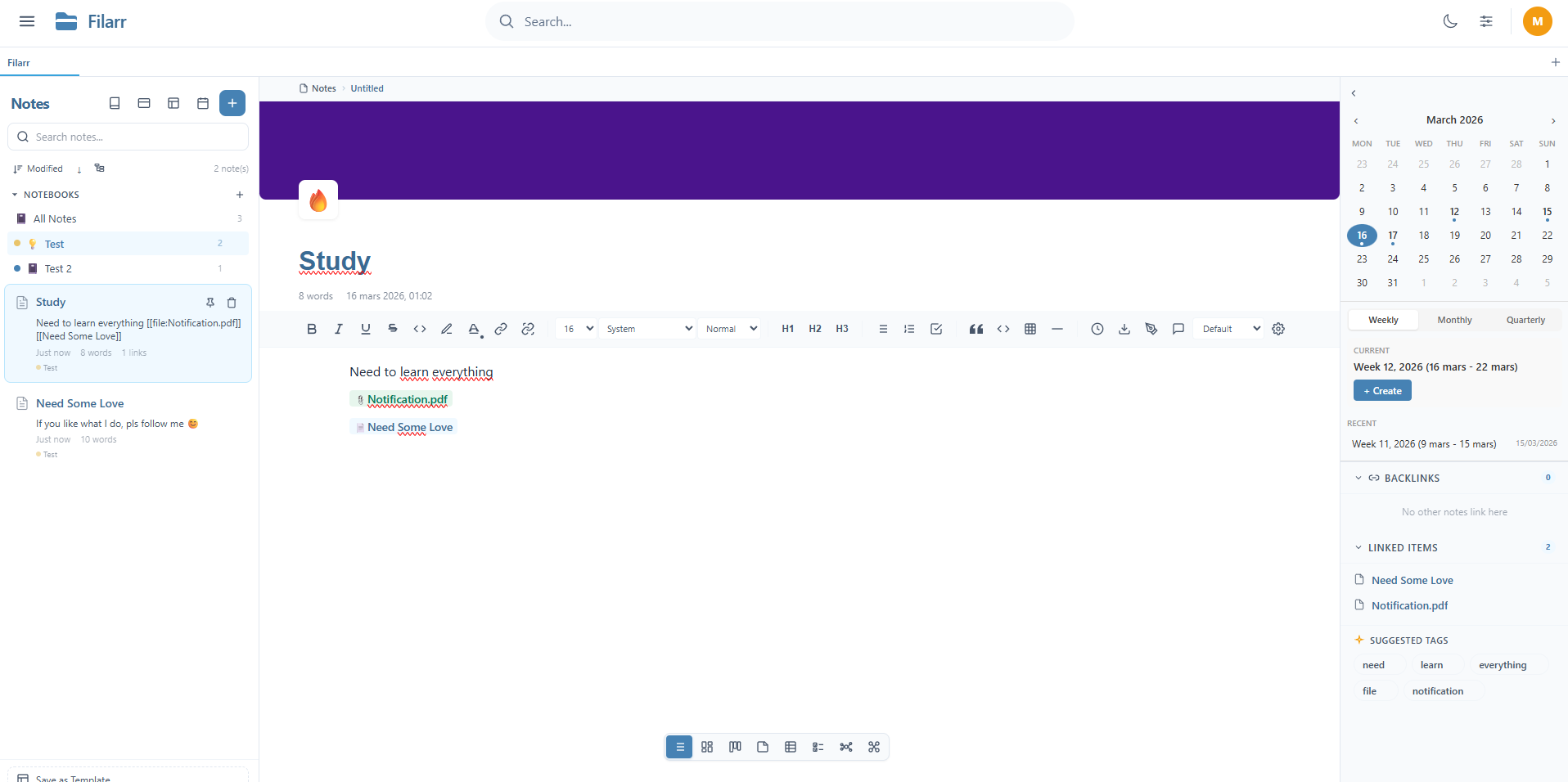
A rich note editor — Built on TipTap. Wiki-links [[]], backlinks, transclusion, templates, daily notes, flashcards with spaced repetition. Seven views: list, masonry, kanban, sticky notes, canvas, table, and graph.
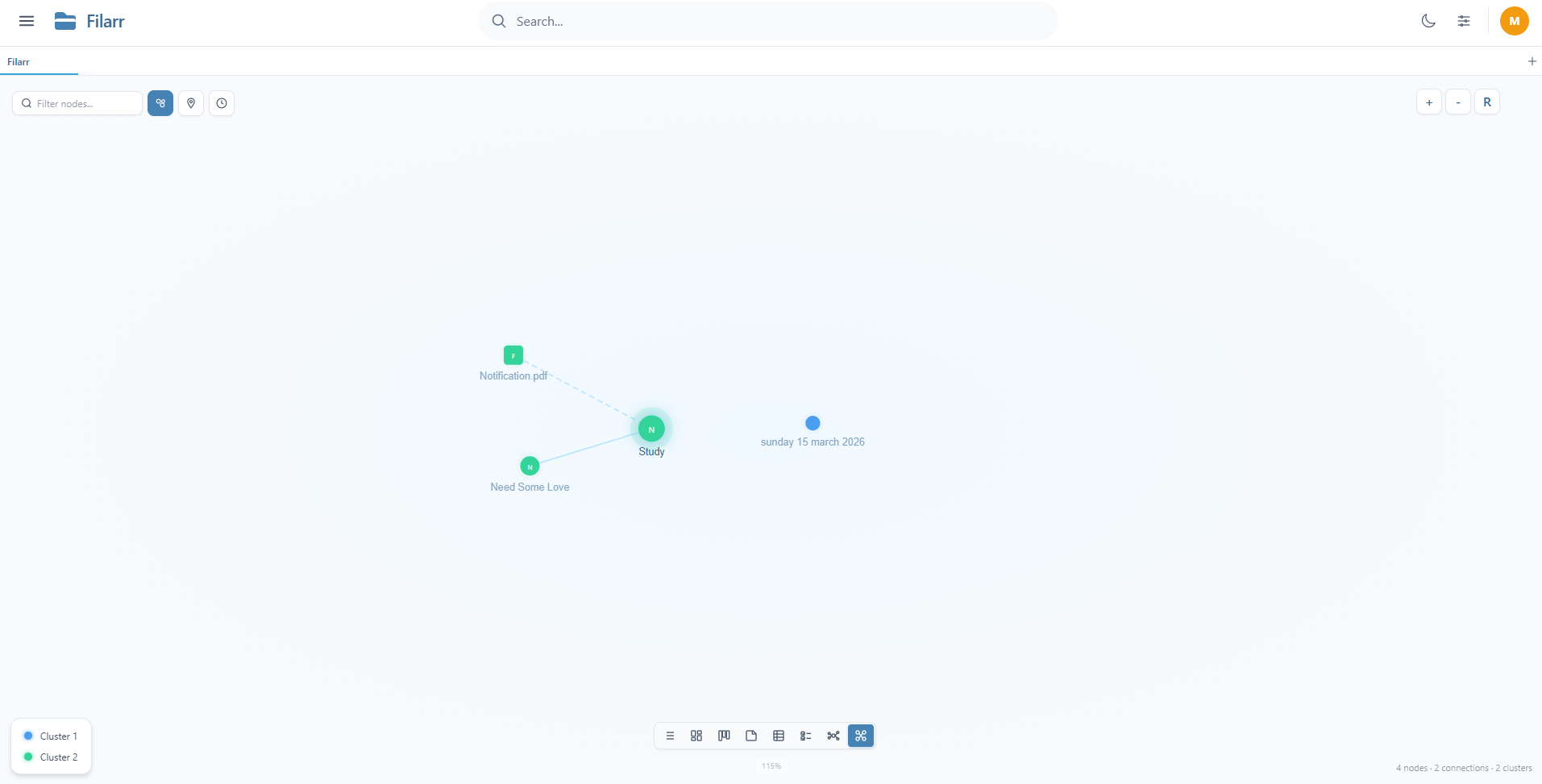
A knowledge graph — Not just for notes. Filarr's graph connects notes, files, AND folders. Force-directed physics simulation built from scratch. Automatic cluster detection (Louvain algorithm), heatmap mode, time travel slider. No library — pure canvas rendering.
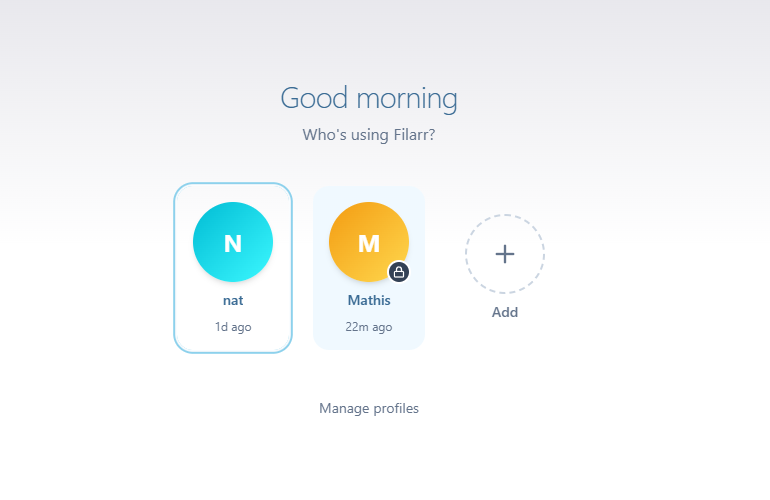
Multi-profile isolation — Each profile has its own encryption keys, its own files, its own notes. Profile "Work" and profile "Personal" share nothing. Not even the master key derivation.
Which technical choices would I make again?
Electron. Yes, I know. But Electron gives me Windows + macOS + Linux from one codebase, native filesystem access, and a mature ecosystem. Tauri was tempting but the WebView inconsistencies across platforms were a dealbreaker for a file manager.
AES-256-GCM with per-file keys. Not AES-CBC, not a single vault key. GCM gives authenticated encryption (integrity + confidentiality), and per-file keys limit the blast radius of any single compromise.
PBKDF2 with 600,000 iterations + SHA-512. Slow on purpose. Your password derives the KEK, and we make brute-force expensive.
TipTap for the editor. ProseMirror under the hood, but with a much better API. The block-based architecture lets me add wiki-links, transclusion, and custom blocks without fighting the framework.
Force-directed graph from scratch. D3-force was too opinionated and too slow for large graphs. I wrote Coulomb repulsion and Hooke springs by hand. Force-directed physics, no library. Smooth at 500+ nodes — Barnes-Hut optimization is on the roadmap for larger graphs.
What's next for Filarr?
Filarr is free and will stay free for the local workspace. Everything you see today — encryption, notes, graph, canvas, multi-profile, 51+ formats — costs nothing.
Cloud sync is coming. It will be optional and paid. Your data will be encrypted client-side before upload — the server never sees plaintext. But the local-only experience will always be complete and free.
Open-source is on the table. I'm considering open-sourcing the codebase once the encryption architecture is independently audited. Transparency matters for a privacy tool — I want people to verify the claims themselves.
I'm one developer building this in my spare time. If Filarr solves a problem for you, tell me about it. If it doesn't yet, tell me what's missing.
Related articles
- ComparisonNotesnook vs Filarr: Two Encrypted Workspaces, Two Very Different BetsNotesnook vs Filarr compared: encryption, sync, pricing, mobile and open source. Which encrypted notes or workspace app fits your files, notes and privacy needs.
- ComparisonNotion alternatives that respect your privacy (2026)Notion stores your data on its servers and holds the encryption keys. Here are the credible privacy-first alternatives in 2026 — encrypted by default, local-first, or open source — with current pricing and a migration path for each.
- AnnouncementIntroducing Filarr — an encrypted, local-first workspaceNotes, files, graph view, canvas — all encrypted with AES-256-GCM, all on your machine. No cloud required. No account needed. Free.